
Circulation and Collector Reception of the Grant Dollar Coin
This Ulysses S Grant dollar coin belongs to the extensive Presidential $1 Coin Program launched in the early 21st century.
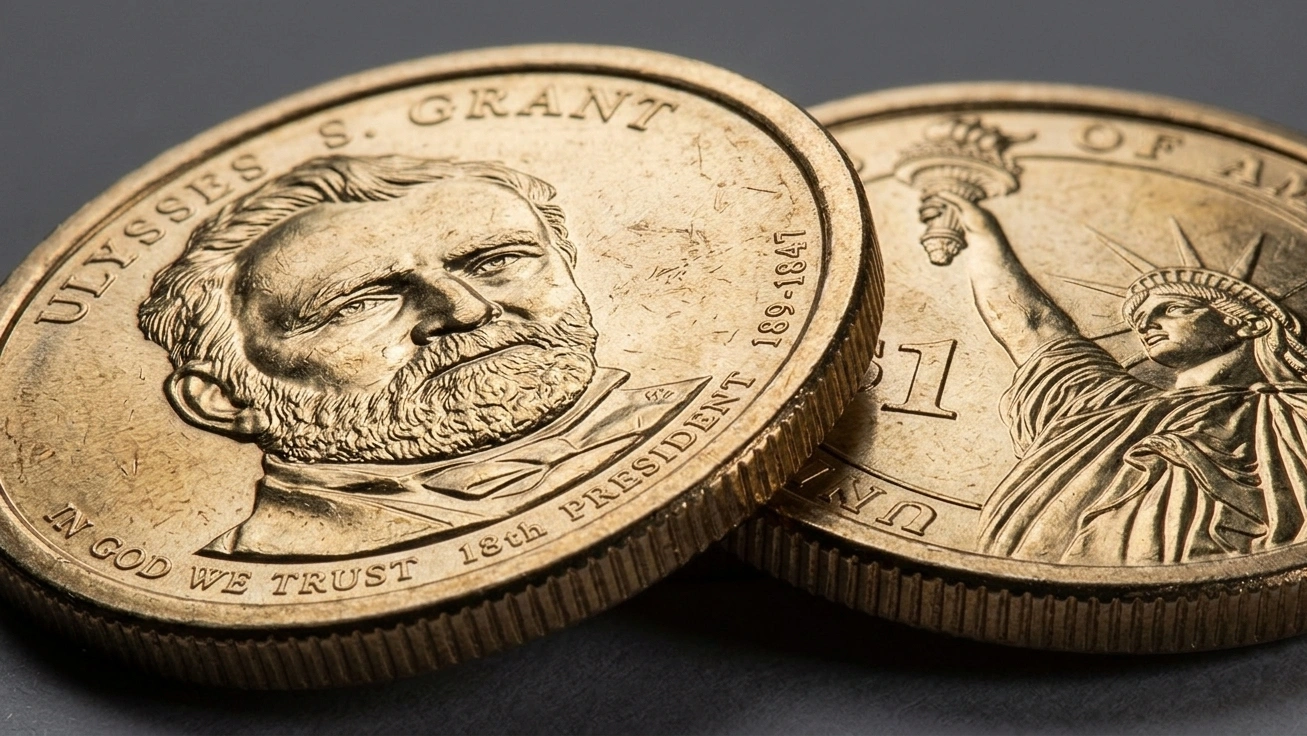
Distribution cycles for this specific issue coincided with major Treasury policy shifts regarding the circulation of golden-colored dollars.
Feature | Data |
Year of Minting | 2011 |
Item Mass | 8.1 grams |
Outer Diameter | 26.5 millimeters |
Edge Thickness | 2 millimeters |
Core Metal | Copper |
Outer Coating | Manganese-Brass |
Edge Design | Incuse inscriptions featuring date and mottos |
Production Volumes and Mint Distribution
Mintage figures for the Ulysses S. Grant dollar stay significantly lower than the early stages of the program.
Government officials decided to halt production for daily commercial use toward the end of 2011.
Most units produced were diverted to Federal Reserve vaults or sold directly in specialized collector sets.
Breakdown of the 2011 release:
Philadelphia (P): 37,940,000 units
Denver (D): 38,080,000 units
San Francisco (S): 2,973,498 units (Proof quality)
Comparing Grant’s mintage to the 2007 Washington dollar reveals a massive trend → 340,360,000 (2007) → 76,020,000 (2011).
Volume dropped by more than 77%.
Market Value and Grading in 2026
Pricing for this coin depends heavily on professional condition assessments using the Sheldon scale.
Certification by services such as PCGS or NGC, or simply grading with the best free coin identifier app, is a mandatory requirement for sales exceeding face value.
Coin Condition | 2026 Market Price | Annual Price Change |
MS65 | $12 | +4% |
MS66 | $28 | +6% |
MS67 | $110 | +12% |
MS68 | $2,450 | +18% |
Finding MS68 examples is extremely rare due to the high-speed automated bagging processes at the mint.
Frequent contact between coins during transport creates microscopic marks on the soft metal coating.
Auction Records and Sales Statistics
Public bidding in 2023 established a record-breaking price for the Ulysses S. Grant dollar.
One specimen graded MS68 by PCGS reached a final sale price exceeding $3,500.
Price movements observed over the last three years:
2024: Values stabilized around $2,100 for top-tier grades.
2025: Growing interest in coins with original luster pushed prices toward $2,300.
2026: Current listings on platforms like Heritage Auctions start at $2,400 for similar lots.
Investment growth in the elite grade segment averages 15% annually.
Manufacturing Errors and Mint Defects
Production blunders act as a catalyst for exponential increases in a dollar's worth.
Numismatic interest focuses heavily on interruptions in the standard technological cycle.
Types of defects and their financial impact:
Missing Edge Lettering
The coin skipped the phase where the date and mottos are applied.
Value: $60 — $150.
Double Edge Lettering
Text on the rim was struck twice with visible displacement.
Value: $200 — $450.
Off-Center Strike
The design is shifted away from the center of the metal blank.
Price for a 20% shift → $350.
Price for a 50% shift → $1,200.
Comparative Analysis with the 2011 Series
Other presidents honored in 2011 include Andrew Johnson, Rutherford B. Hayes, and James A. Garfield.
Grant’s dollar holds the second-highest production volume for that specific year.
President | Total Mintage (Millions) | MS68 Record Price |
Andrew Johnson | 72.6 | $1,850 |
Ulysses S. Grant | 76.0 | $3,500 |
Rutherford B. Hayes | 74.4 | $2,200 |
James A. Garfield | 74.2 | $1,900 |
Grant consistently demonstrates higher market stability within the investment-grade segment.
Features of Collector Proof Sets
Coins bearing the "S" mint mark were produced using multiple strikes on polished blanks.
These units feature mirror-like fields contrasting against frosted portrait reliefs.
Grading statistics for 2026 Proof versions:
PR69 Deep Cameo: $8 — $12.
PR70 Deep Cameo: $55 — $85.
Presence of fingerprints or hairline scratches on the mirror surface drops the value to $2.
Market saturation of PR69 examples in 2026 currently limits price growth in that category.
Preservation Factors and Metal Aging
Manganese-Brass tends to darken rapidly when exposed to oxygen.
Dark spots or oxidation permanently reduce the numismatic value of a specimen.
Causes of surface degradation:
High humidity in the storage area.
Contact with PVC materials found in older coin albums.
Direct exposure to ultraviolet sunlight.
Using airtight capsules made from inert plastic prevents metal spoilage over time.
Examples retaining their original golden brilliance sell for 40% more than aged versions.
Authentication Methods for Mint Errors
Cases of artificial edge manipulation exist where text is manually removed to mimic rare errors.
Professional inspections involve verifying the total mass of the object and checking the coin with the coin identifier online.
Mechanical grinding of the edge → Weight reduction to 7,9 grams.
Authentic error → Maintenance of the standard 8,1 grams mass.
Experts also examine the surface microstructure for any traces of modern grinding tools.
Investment Outlook
Market trends suggest sustained demand for rare grades within the Presidential series.
Halt of dollar coins in general U.S. circulation contributes to their rising collectible status.
Expected performance metrics:
Circulated coins: 0% annual return.
MS67 specimens: 5-7% annual return.
Rare minting errors: 10-12% annual return.
Investing in the Ulysses S. Grant dollar in 2026 requires verified certification from major grading companies.
Auction Disposal Procedures
Selling valuable specimens occurs through specialized numismatic platforms.
Auction house commissions typically range between 15% and 20% of the hammer price.
Standard sale phases:
Preliminary online valuation based on high-resolution photos.
Shipping the coin for physical inspection by staff experts.
Catalog placement with a detailed description of technical traits.
Bidding process and final settlement with the owner.
Using major auction houses for coins valued under $50 is generally not cost-effective.
Structural Design Characteristics
Artist Don Everhart designed the Grant portrait found on the front side.
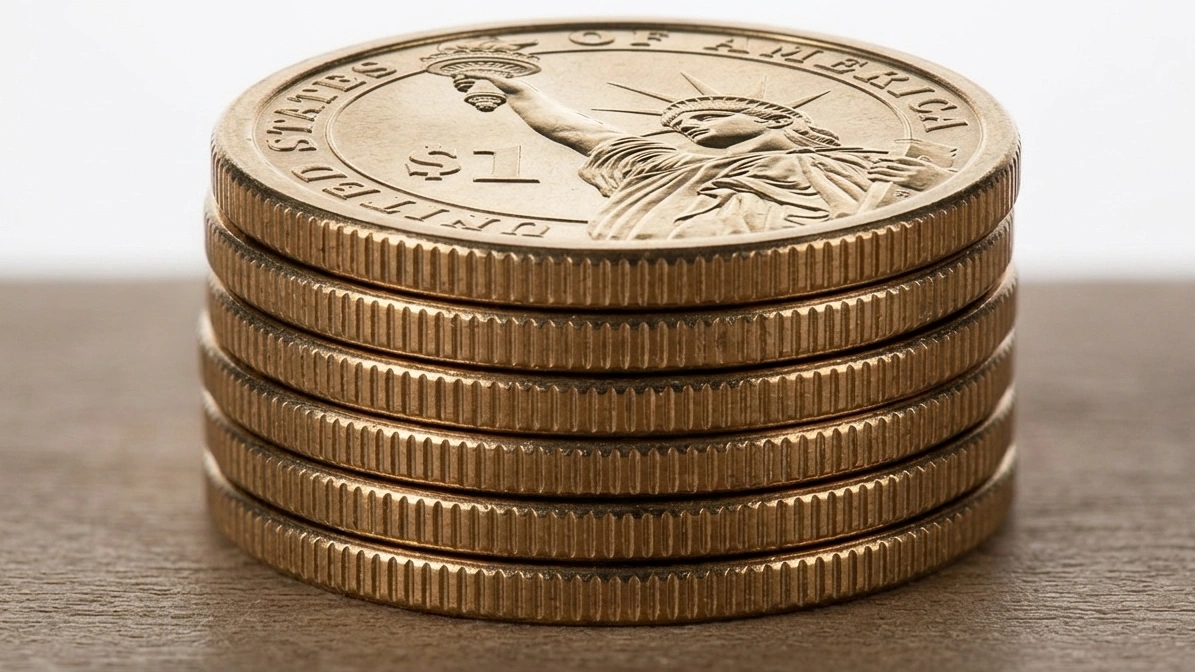
Reverse sides feature the Statue of Liberty image, which is uniform across the entire series.
Sharpness in the crown and torch details on the back serves as an indicator of strike strength.
Weak striking on central elements often leads to a lower final grade for the coin.
Presence of bright die-polishing lines on the field is not considered a defect by graders.